
Key Takeaways
- Waterfront is not one market: Oceanfront, Intracoastal, deep-water canal, fixed-bridge canal, and lakefront properties carry very different values, insurance costs, and buyer pools.
- Access must be verified, not assumed: Bridge clearance, water depth at mean low tide, shoaling, and the route to the inlet determine whether a boat can actually use the property.
- The shoreline is part of the purchase: The seawall, dock, lift, flood zone, insurance, and permits deserve their own due diligence before removing contingencies.
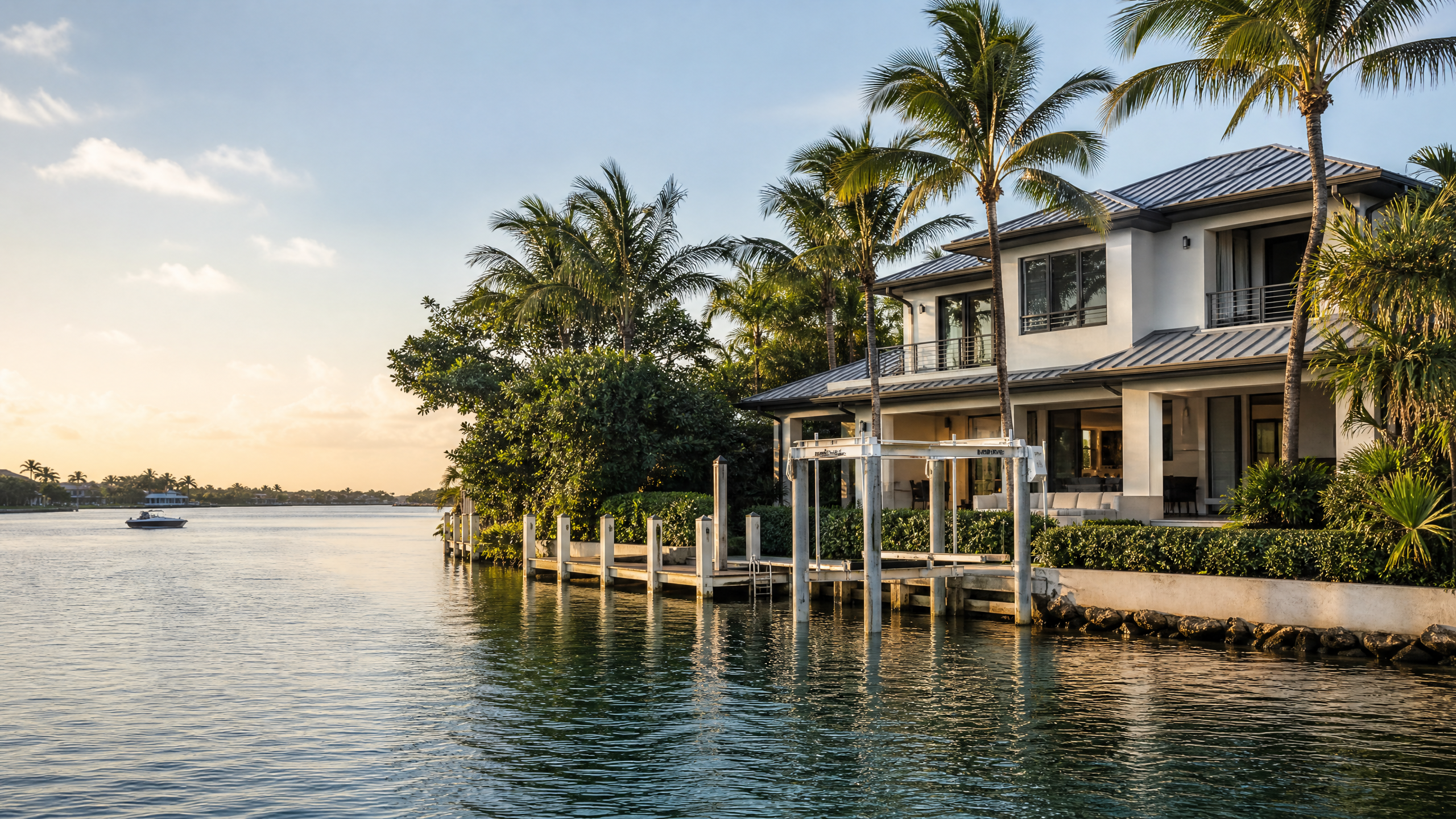
Waterfront homes in South Florida offer something few other properties can match: a daily connection to the water, direct access to boating, and a limited supply of homes in highly desirable locations. They also require more careful due diligence than a traditional inland property. The view may be beautiful, but the real value often depends on what lies beneath the waterline, beyond the seawall, and along the route to the ocean.
For buyers considering waterfront property in South Florida, the most important question is not simply whether a home sits on the water. It is whether the property delivers the type of access, protection, privacy, and carrying cost that fits the way you intend to live.
What Counts as Waterfront in South Florida?
The word “waterfront” describes several distinct property categories. Before comparing prices, make sure you are comparing properties with similar access and obligations.
Oceanfront homes sit directly on the Atlantic and provide the strongest coastal views, but they also face the greatest exposure to wind, waves, salt, erosion, and flood risk. Intracoastal homes offer wide water views and, in many locations, excellent boating access. Deep-water canal homes without fixed bridges are especially appealing to boat owners because they can accommodate a wider range of vessels and provide a more direct route to an inlet.
A canal home behind a fixed bridge may offer a similar backyard view at a lower price, but the bridge creates a permanent limit on boat height. Freshwater lakefront properties can provide scenery, privacy, and a dock without saltwater exposure or ocean access. They should not, however, be priced as though they provide a navigable route to the Atlantic.
Buyers can explore the region’s available waterfront properties while keeping these categories separate. The distinction affects resale demand, insurance, maintenance, and the type of buyer who will ultimately compete for the home.
How to Verify Real Boat Access Before Making an Offer
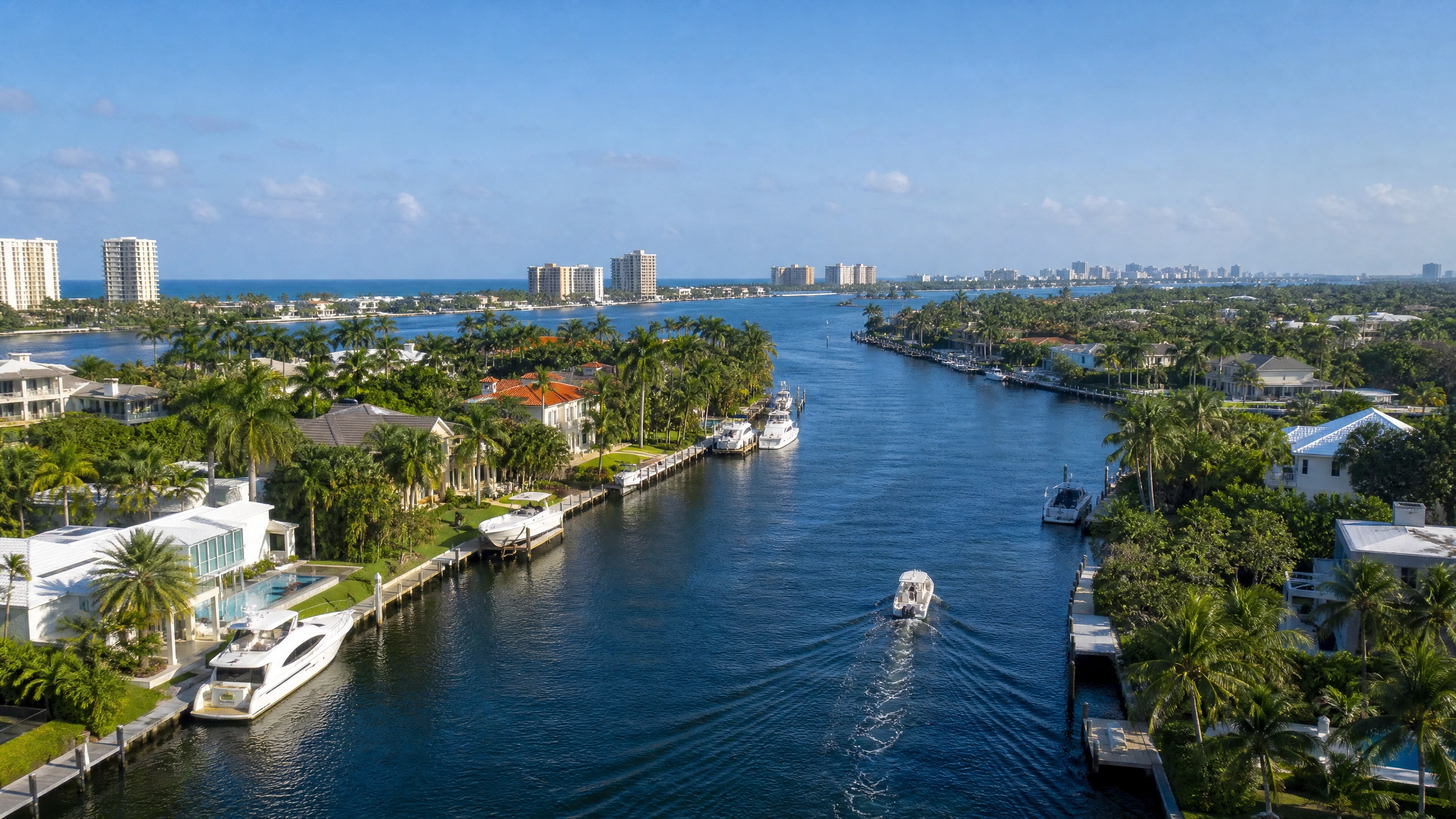
“Ocean access” is a marketing phrase until a buyer verifies the route. If boating is part of your purchase decision, evaluate the entire trip from the dock to open water, not just the canal behind the home.
Start with air draft, the height of the boat above the waterline. A fixed bridge with insufficient clearance can eliminate a boat you already own or hope to purchase. Drawbridges may open, but their schedules, traffic, and maintenance affect how convenient the route is. Next, evaluate draft, or the depth required below the waterline. The relevant measurement is the available depth at mean low tide, not a favorable high-tide reading from an old survey.
Finally, consider shoaling. Sand and sediment shift, especially after storms and strong tidal events. A chart or listing cannot replace current local knowledge. Before the inspection period ends, ask a qualified captain or marine professional to run the route with a comparable boat and identify the bridges, turns, channels, and shallow areas that matter.
The Inspection Should Include the Shoreline
A standard home inspection is essential, but it does not fully evaluate a waterfront property. The purchase may include a seawall, dock, pilings, lift, shoreline, pumps, and electrical systems exposed to a harsh marine environment.
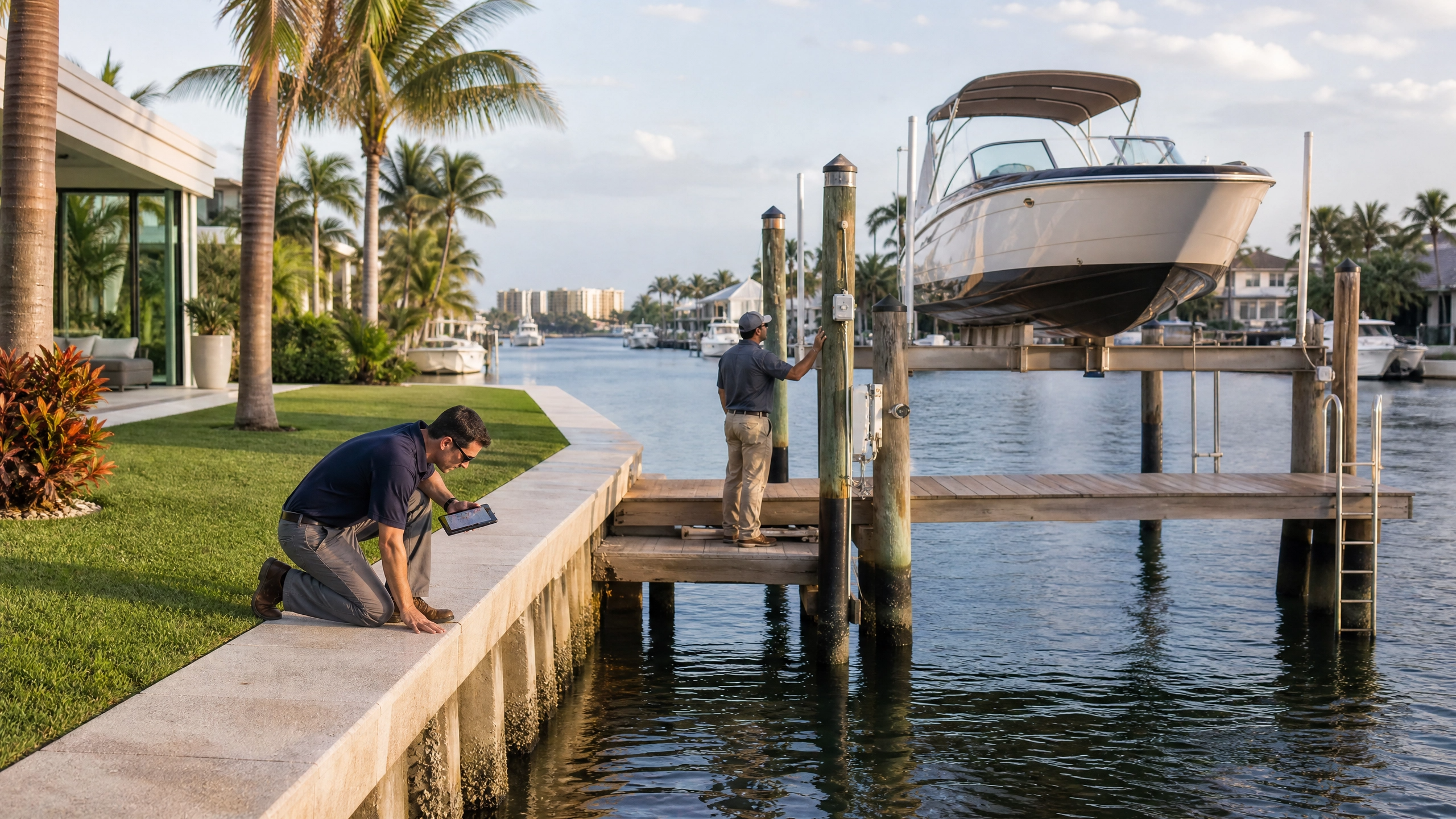
A separate marine inspection should look for cracks, outward bowing, rust staining, corrosion, settlement, erosion, and soft areas behind the seawall. These conditions can indicate that soil is migrating through joints or that the wall’s structural components are deteriorating. A seawall that appears acceptable from the backyard may still require significant work below the waterline.
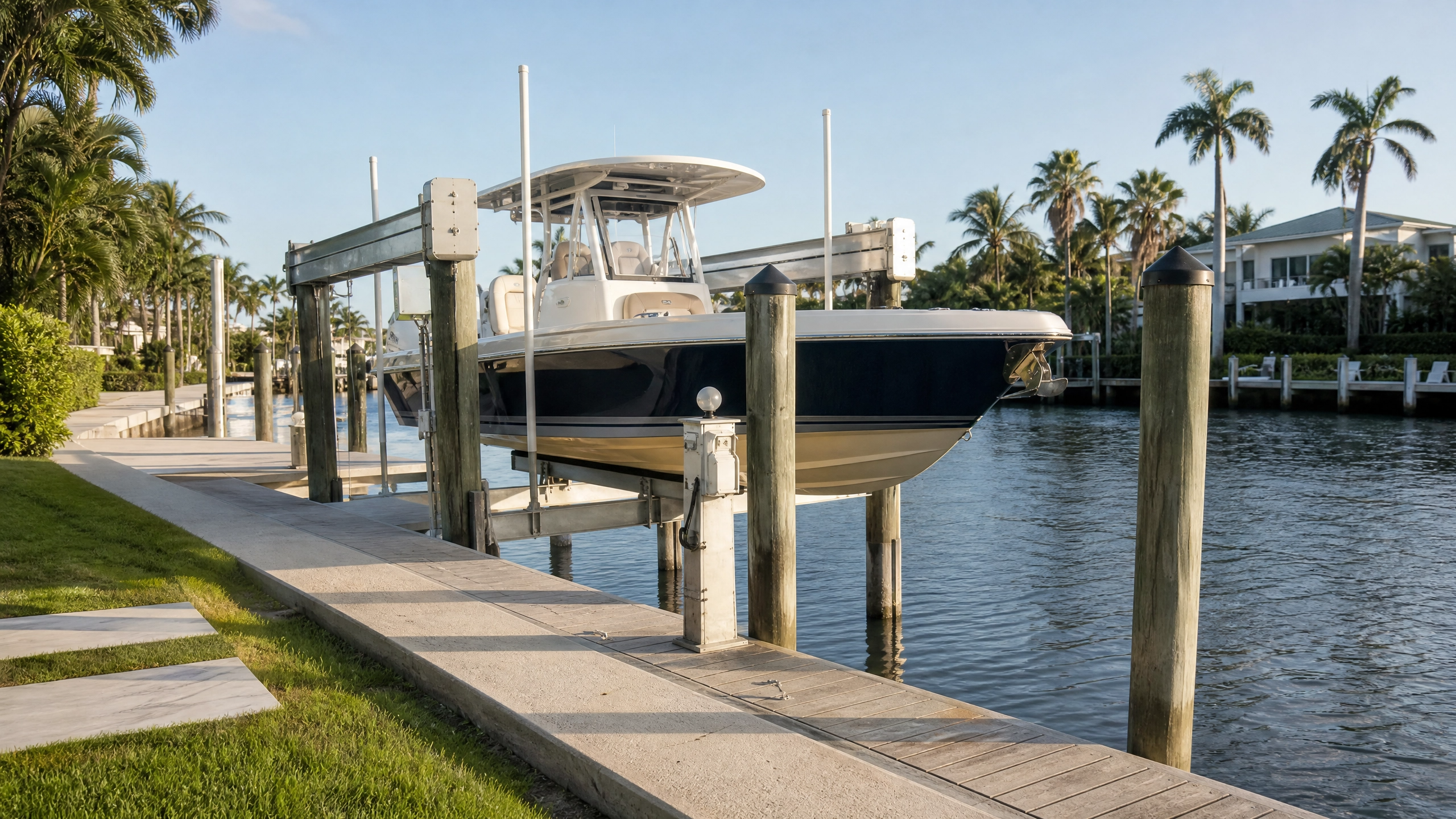
The dock and lift deserve the same attention. Pilings should be inspected below the waterline, the lift’s capacity should be compared with the buyer’s intended vessel, and dock electrical components should be reviewed for safety and code compliance. This is one reason a home valuation should account for more than interior square footage.
Budget for the Total Cost of Ownership
Waterfront pricing does not end at the contract price. Buyers should request written estimates for any seawall, dock, lift, shoreline, drainage, or storm-protection work identified during due diligence. Planning ranges vary widely based on material, equipment access, erosion, engineering requirements, permitting, and the length of shoreline.
Insurance is another major part of the budget. A buyer may need to evaluate homeowners, windstorm, flood, and excess coverage separately. The premium can depend on the flood zone, elevation, construction, roof, storm-resistant features, claims history, deductible, and the availability of private coverage. A sound home buying plan treats these documents as part of the property’s financial picture rather than as administrative details.
Flood Zones, Setbacks, and Permits Can Change the Plan
Waterfront ownership is shaped by public regulations as well as private property lines. FEMA flood maps affect insurance and lender requirements, while local building rules may limit additions, seawalls, docks, lifts, pools, and other improvements near the water.
Before assuming that a dock or lift can be replaced, confirm the permit history with the municipality and the applicable state or environmental agencies. A prior owner’s unpermitted work can become a future owner’s problem. Beachfront buyers should also understand the distinction between private property and the state-owned area seaward of the mean high water line.
For buyers comparing communities, the Boca Raton, Delray Beach, West Palm Beach, and Highland Beach markets each offer different combinations of canals, Intracoastal frontage, oceanfront homes, marinas, bridges, and municipal requirements.
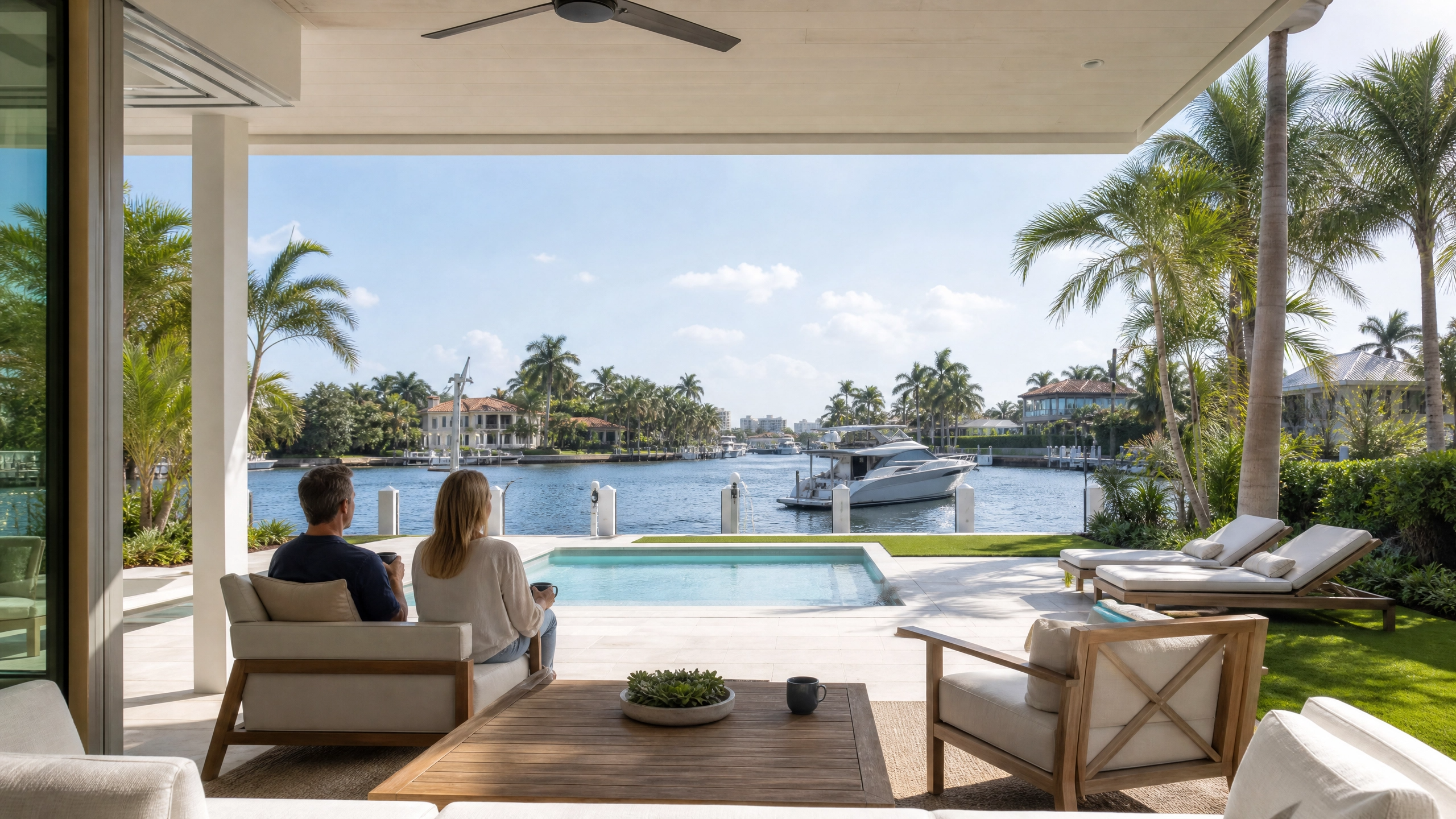
Which Waterfront Property Fits Your Lifestyle?
The right home depends on how you use the water. A serious boater may prioritize no fixed bridges, dependable depth, a manageable inlet, and a lift sized for a specific vessel. A buyer who wants occasional day trips may accept a lower bridge or a shorter navigable route in exchange for a lower purchase price.
If the primary goal is a view, privacy, and outdoor living rather than boating, lakefront or restricted-access properties may offer better value. Seasonal residents should prioritize impact protection, remote monitoring, functioning pumps, and a trusted local contact who can inspect the property after a storm. Those comparing high-end homes can also review the region’s luxury homes and gated communities.
Boca Raton Boating Communities
Proven Waterfront Results in South Florida
Brian Pearl and Vini Antonacci have sold more waterfront properties throughout the area than an estimated 90% of competing agents, giving buyers experience that goes well beyond reading listing remarks. Representative waterfront sales and buyer-side acquisitions include 2841 NE 23rd Court in Hillsboro Harbor, 500 SE 5th Avenue in Boca Raton, 673 Osprey Point Circle in Boca Raton, 1416 Cypress Way in Camino Gardens, and 7320 NE Bay Cove Court in Boca Raton, and many more. The portfolio also spans Lighthouse Point, Fort Lauderdale, Ocean Ridge, Gulf Stream, and Hillsboro Beach, where bridge clearance, dock configuration, seawall condition, and navigable water materially affect value.
Find Your Own South Florida Waterfront Home
The Pearl Antonacci Group at Compass helps buyers evaluate South Florida homes through both a lifestyle and a long-term ownership lens. Our team brings more than 70 years of combined experience, over 850 transactions, and approximately $1 billion in sales volume to the process.
Whether you are searching for a canal home in Boynton Beach, an Intracoastal property in West Palm Beach, or a coastal home in Fort Lauderdale, we can help you compare access, condition, location, and value. Review our relocation guide, request a home valuation, or contact us to discuss your search.
FAQs About Buying Waterfront Property in South Florida
What does “no fixed bridges” mean, and why does it raise the price?
It means no permanent bridge limits your boat’s height between the dock and open water. Drawbridges open on a schedule or on request, while fixed bridges never do. Because larger vessels physically cannot pass a low fixed span, no-fixed-bridge homes appeal to a much larger buyer pool and typically command a premium over otherwise comparable properties.
How do I verify boat access at a waterfront home?
Check air draft, depth at mean low tide, charted soundings, shoaling history, bridge clearances, and bridge opening schedules along the full route to your intended inlet. The most reliable step is running the route with a captain in a boat comparable to the one you plan to own before your inspection period expires.
Does a standard home inspection cover the seawall and dock?
Usually not in sufficient detail. Arrange a separate marine inspection of the seawall, dock, pilings, lift, shoreline, pumps, and marine electrical systems, performed by a qualified marine contractor, engineer, or marine surveyor. This inspection frequently identifies the largest single cost in a waterfront transaction.
Is flood insurance required on Florida waterfront property?
Lenders generally require flood insurance for financed purchases in high-risk zones, and it is often prudent even when optional. Federal coverage limits may be insufficient for higher-value homes, so private or excess coverage deserves early attention. Confirm the flood zone by address and obtain quotes as soon as you are under contract.
Can I build a larger dock or add a boat lift after closing?
Not necessarily. Municipal codes, county rules, state submerged-land requirements, environmental permitting, HOA restrictions, and shoreline setbacks may all apply. Verify the existing permit history and the feasibility of your intended improvements before purchasing rather than assuming an existing structure can be expanded or replaced.
What is the most important waterfront due-diligence step?
There is no single step for every buyer, but the strongest process combines an on-water route review, a marine inspection of the seawall and dock, early insurance quotes, a current survey, and permit verification. Together these confirm whether the property truly delivers the access and ownership costs the listing implies.
Register Now for Exclusive Benefits
Sign up for free with PearlAntonacci.com and get unlimited access to details about South Florida MLS® listings. You'll be able to save your custom searches, bookmark your favorite South Florida properties, and request private showings. We will also email you new listings and price reductions that match your search criteria as they come available.
Contact Information
Posted by Brian Pearl onEnjoy this blog post? Click here to subscribe for updates
Leave A Comment